

How to take care of your clothes
expert tips from the designers who make them

Taking caring of your clothes is one of the most sustainable things you can do for your wardrobe. I asked two designers — Jane Herman of The Only Jane and Erin Reitz of E.M. Reitz — to share their expert tips on washing jeans, caring for shirts, treating stains, and making quality pieces last for years.
Every January, I see the typical wardrobe resolutions come through on my feed: no-buy months, secondhand shopping only, wardrobe detoxes etc, etc. Personally, I’m not a fan of all-or-nothing restrictions and hard rules around my wardrobe. What I think matters more is wearing what we already have in our closets AND actually taking care of it.
Let’s do some math: a $300 shirt you wear for a decade is a better investment than a $50 one from Zara that falls apart in less than a year. But if you don’t properly care for that $300 shirt, then what’s the point?!
If you care about keeping your clothes in good condition, I highly recommend Emilia Petrarca’s Repair Month series—it’s what inspired me to write this letter. But I have a confession: I despise doing laundry. I blame the ADHD, but I only tackle my overflowing hamper when I’ve run out of options. Putting it away? We’re not discussing that. A concerning amount of my wardrobe lives at the dry cleaners.
But this year I really want to do better.
So I did what I always do when I want to learn something new: I asked the experts. Specifically, I reached out to two designers whose pieces I love and wear, and asked them to share their best tips on caring for clothes.
What they told me might surprise you (spoiler: you’re probably washing your clothes too much).
First up: Jane Herman, who literally grew up in the denim business and knows more about jeans than anyone I know.
How to wash your jeans and tees
Tips from Jane Herman of The Only Jane
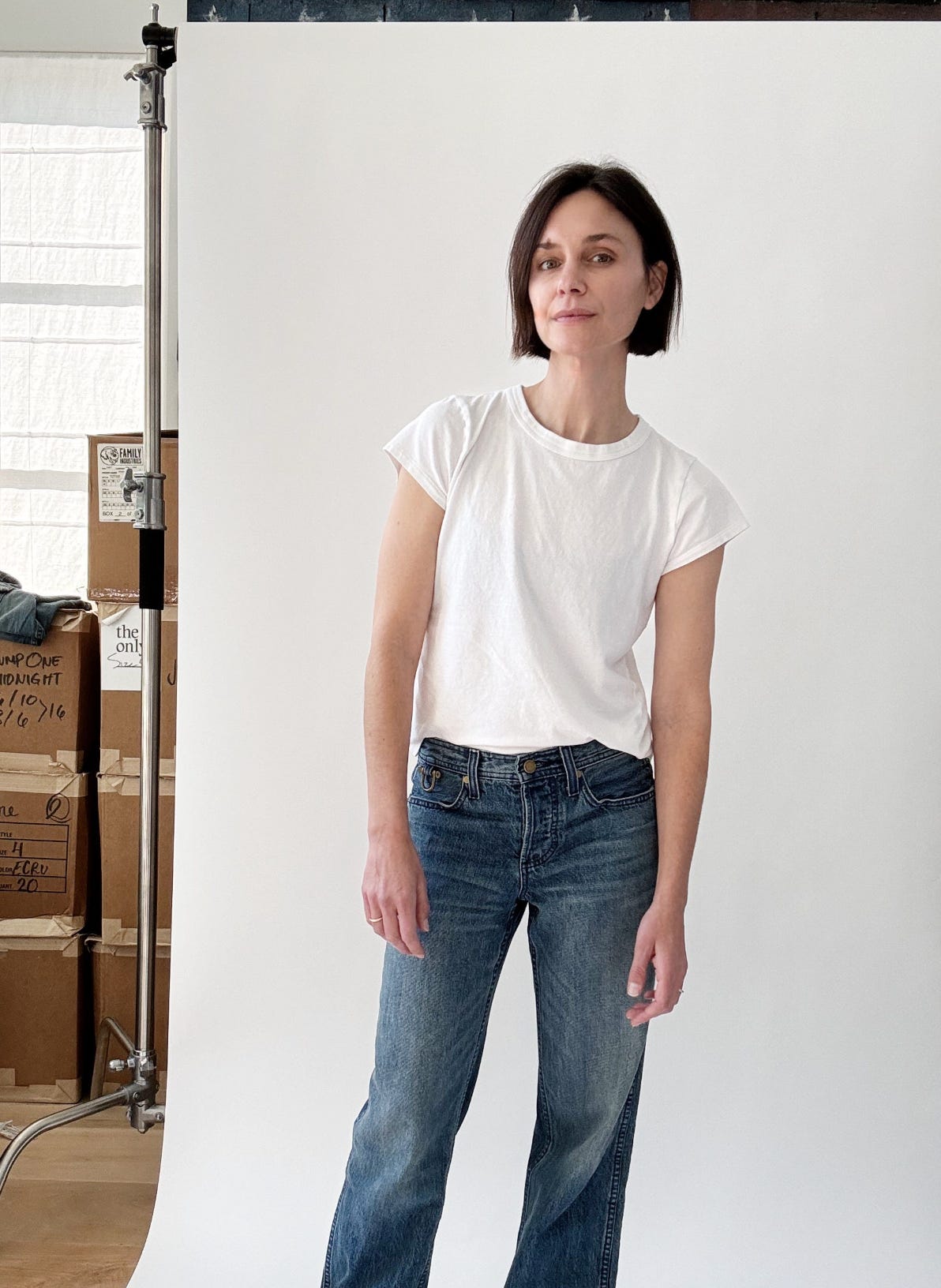
Jane’s newsletter, Jane on Jeans, was one of the first Substack’s I ever subscribed to. As a denim girl myself, I couldn’t get enough of her jean recommendations—and her t-shirts recs, too. I discovered my favorite Flore Flore tees through her back in 2024.
Last fall, I got to meet Jane and try on her jeans in person, and they’re as incredible as everyone says. I always get asked “what are those jeans??” when I wear the Sally, which has quickly become my most-worn jean in my entire wardrobe.
Jane grew up selling jeans and t-shirts at her family’s Ron Herman stores in LA. She moved to New York and worked as a fashion editor at Vogue and T Magazine. She also worked on the creative teams of GAP and Theory, and co-founded JeanStories.com, a beloved denim site.
In 2020, she launched her denim label, The Only Jane, making one denim jumpsuit that’s been featured in The Financial Times, WSJ, and Vogue. She expanded the line in 2021 to include jeans, jean jackets, and more jumpsuits—all cut in exquisite denim and made with love in LA.
Here are Jane’s tips on taking care of your jeans and tees.
JEANS
Her washing method and frequency:
I wash my jeans as needed, but certainly not every time I wear them, and I try to wash my vintage jeans as little as possible. I wash all my jeans the same: cold, little detergent, air dry. Once they’re completely dry, I like to put them in the dryer’s steam cycle with half a non-scented dryer sheet for 15 minutes, just to soften them up.
Her take on the put-your-jeans-in-the-freezer method:
Some people do this as it kills certain bacteria, but I don’t practice this technique personally.
How she stores and organizes her jeans:
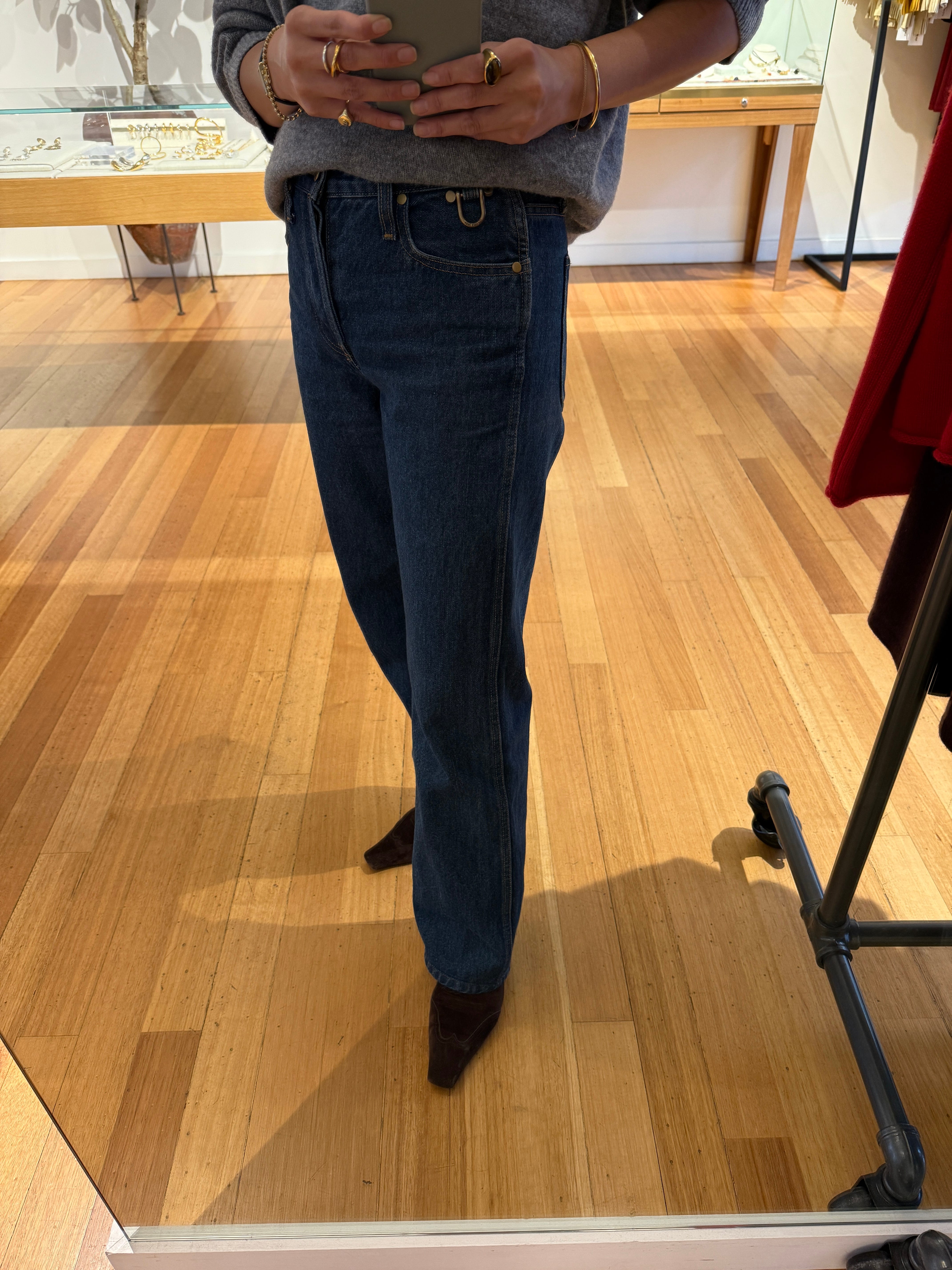
I hang my contemporary jeans by wash, light to dark, in my closet. My vintage jeans I keep separate and folded in a pile, and the ones I’m trying on and test-driving I keep in a messier working pile on a chair outside my closet. It’s not ideal and I wish I had about 10x more space for jeans storage, but I have to work with the closet I have—and the closet I have is small.
Her advice on what to look for when shopping for jeans:
This is its own story! But I personally like jeans without stretch, and if it’s a new brand, expensive hardware will always catch my eye. Hardware is often the first thing that sets a jean apart—I’m talking about the buttons, zippers, and rivets. Two of my favorite newer brands, Ruadh and Ossou, have really thoughtful and lovely hardware. A company that invests in hardware typically invests in everything else, like fabric, design details, and branding.
T-SHIRTS
Her washing method and frequency:
I wash my t-shirts every time I wear them. Normal, low heat to dry. And I like to iron my t-shirts. I don’t do it all the time—I can’t—but I do love it when my white tees are perfectly pressed.
Her go-to stain treatment:
Puracy Stain Remover. All Puracy products are great.
How she stores and organizes her tees:
Folded, in a drawer. All of my white tees are in one drawer, my black ones in another. I don’t really wear any other colored t-shirts.
Her tips on what to look for when shopping for tees:
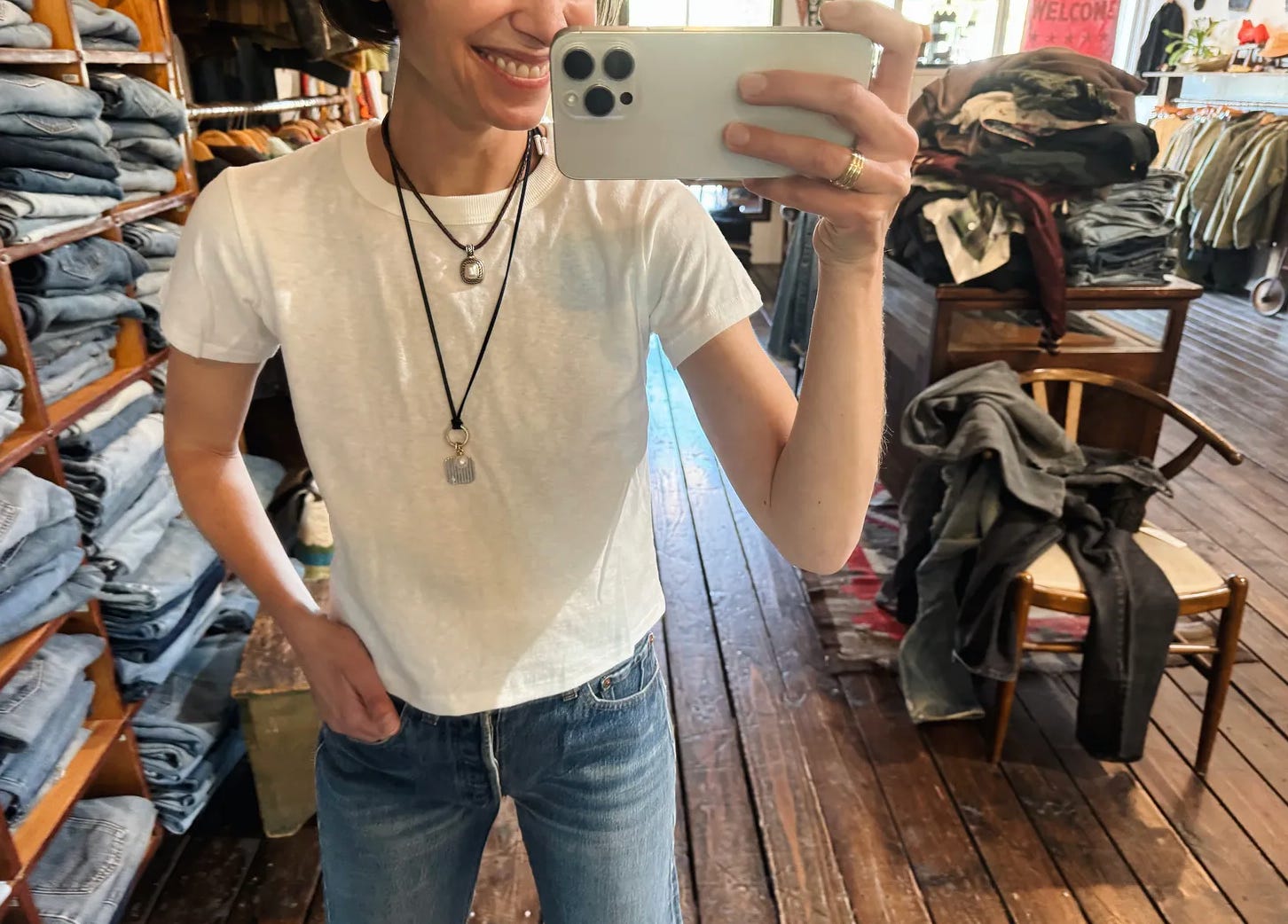
I personally like 100% cotton tees with a drier hand feel. Nothing too silky to the touch, or made with modal. My favorite is this one from Made Revival because it was designed by a vintage expert to pair perfectly with a Levi’s 501. I have one for every day of the week!
Ed Note: I bought the Made Revival tee per Jane’s rec and it’s gooooood !
Her #1 longevity tip:
Putting things in the dryer shortens their life. But remember, we’re talking about 100% cotton. It’s not meant to last forever.
How to care for your shirts
Tips from Erin Reitz of E.M. Reitz
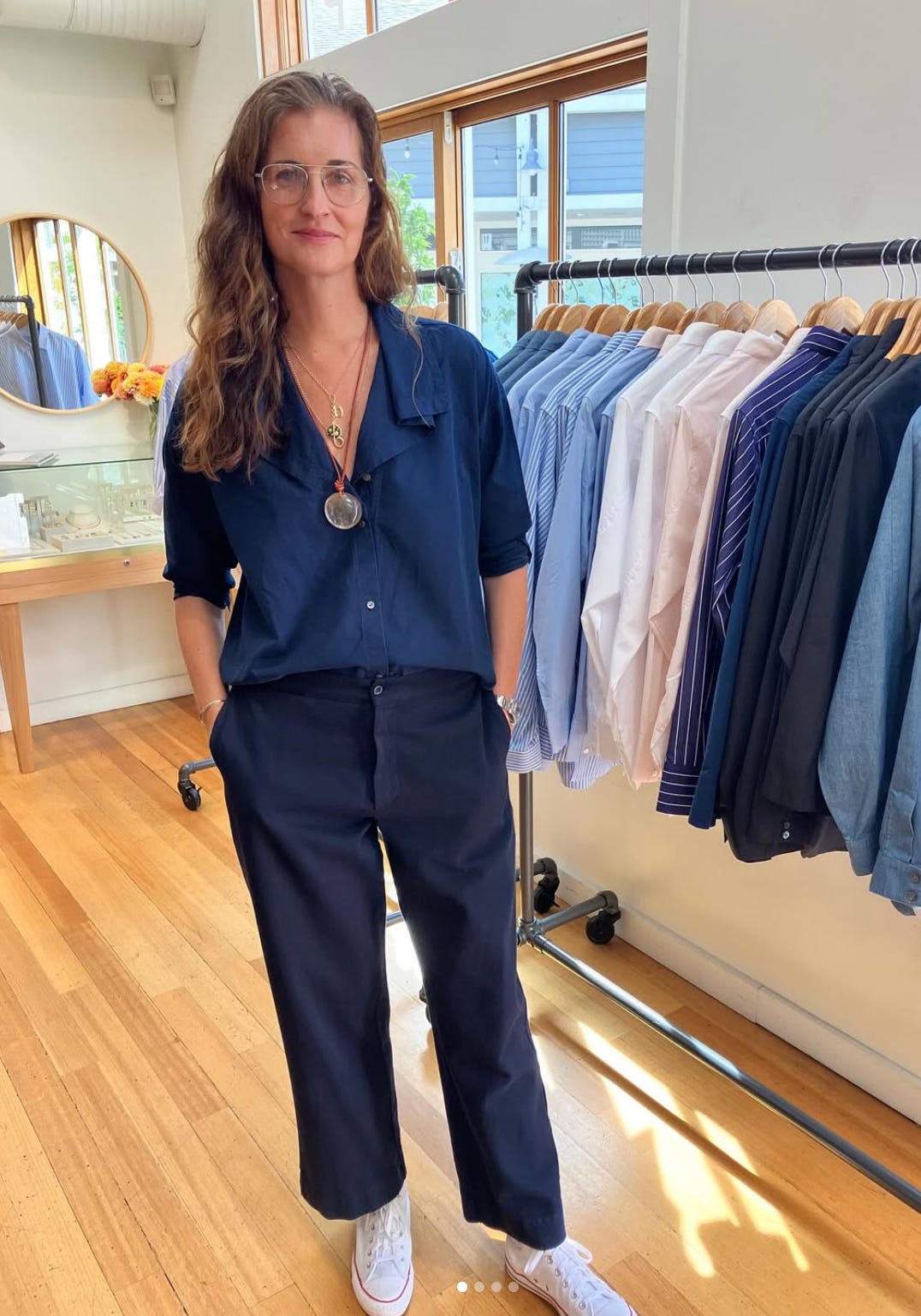
I also met Erin last fall and got to try on her shirts in person. Her attention to detail and thoughtful design comes through in every piece. She sources the highest quality fabrics like Sea Island Cotton (an ancient fiber grown exclusively in Barbados and Jamaica), and works with a lauded pattern-maker and sewing factory in New York’s Garment District.
Erin’s fashion career started with a chance encounter in New York, where the head designer of Nanette Lepore spotted her homemade tote and offered her an internship on the spot. She graduated from FIT and landed design roles at iconic brands like Anne Klein, Ann Taylor, Levi’s, and Eddie Bauer.
Now based in Charleston, Erin founded a home goods shop when she first moved, then found her way back to fashion, working with designer Alabama Chanin. During the pandemic, she started draping her own shirt designs while her newborn napped. She launched E.M. Reitz in 2022, focusing on menswear-inspired shirts for women. The line has since expanded to include men’s shirts, and her husband Brooks Reitz has joined the business.
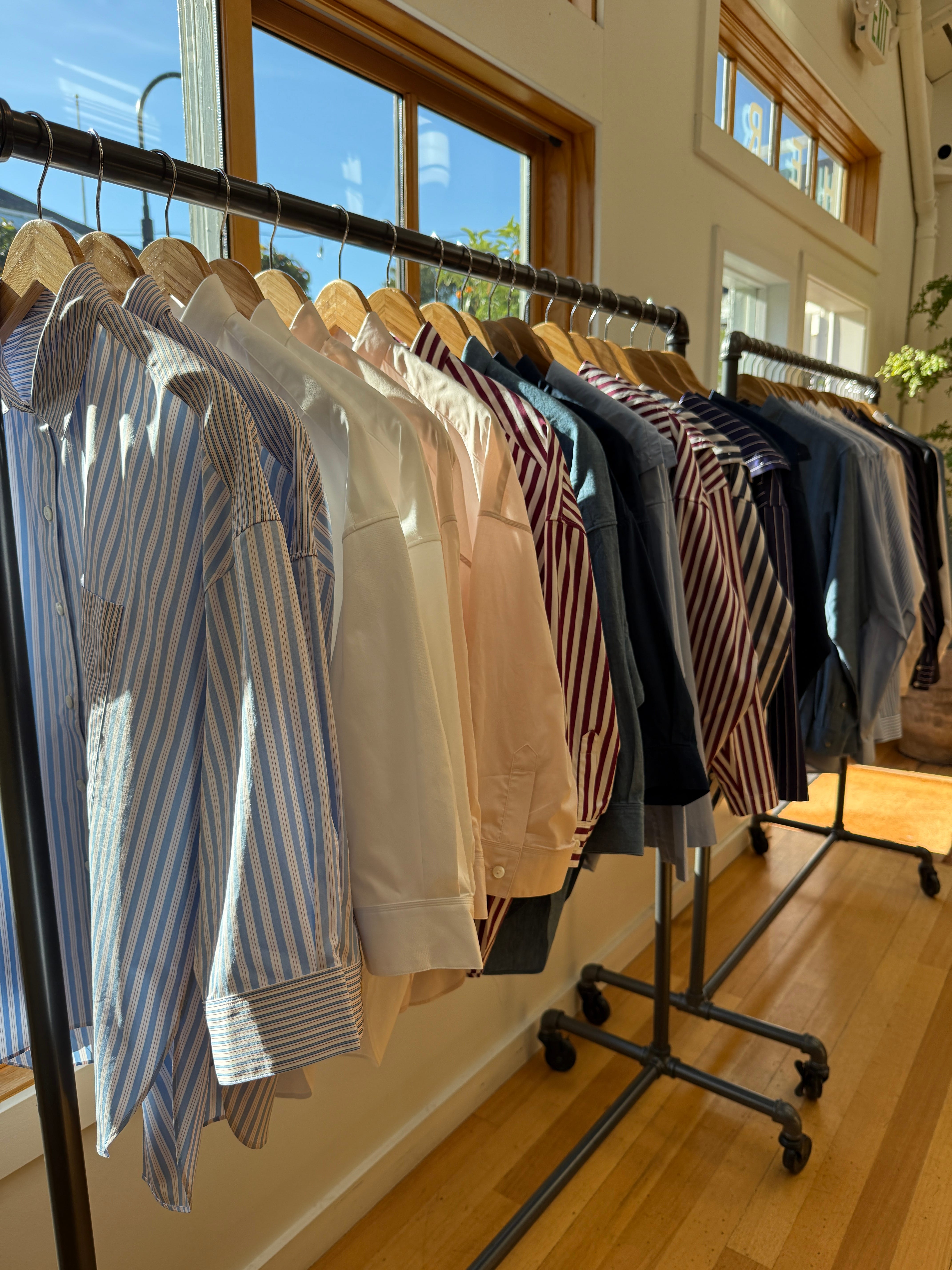
Erin makes the kind of shirts you’ll want to wear every day. Here’s how she takes care of them properly.
On washing frequency:
I only wash my shirts when they’re actually dirty—they have a visible stain or smell. I think most people over-launder, which isn’t great for the shirt and can be wasteful. While washing definitely makes shirts softer, which is a lovely evolution, I try to do as little as possible for overall longevity. Washing gives the shirt a little beating and probably breaks down the fibers a bit each time, which is why they get softer but also weaker. So less is more.
The washing method she swears by:
I wash my shirts separately from regular laundry (never with gym clothes!) I divide by white/light/dark/indigo and wash them on cold, delicate, low load level.
On tackling collar stains:
I use a mix of natural detergent with Oxiclean powder to make a slurry paste. I rub it into the collar at the stain and let it dry until crusty, then wash on delicate. This is especially helpful for ring around the collar.
The drying method that minimizes wrinkles:
I hang dry my shirts. I try to do as quickly as I can after the cycle is over. A real pro-tip: if you have a no-spin cycle, choose that! You can take your shirts out dripping wet and hang in your tub or with a towel underneath. This stop them from being pressed against the machine which is where most wrinkles are set.
Once I hang the shirt, I fully press them with my hands. Flattening the plackets, straightening the collars, buttoning the cuff. I also then snap the full garment from top to bottom, to aggressively stretch them straight up and down. I try to make them look as wrinkle free as possible while they dry—then I can just give a light steam, and they are ready for another round of wears.
If I am motivated, or craving perfection—I will then round up my shirts and iron several at a time. The cotton fabrics really like the heat and organization that an iron gives to its fibers. This can make any shirt feel soft, slick, and new.
How she freshens up her shirts between wears:
Sometimes between wears I steam to refresh the shirt, or hang it near the shower.
On dry cleaning:
I don’t typically dry clean, but many clients do and they like the results. However, I am working on an evening line that has intricate pleats and I imagine I will recommend dry cleaning those.
How she stores and organizes her shirts:
I squish them into the tiny closet I share with my husband. I button the top button, straighten the cuffs, and organize by style (sleeve length, garment length).
Her tips on what to look for when shopping for shirts:
This is part of the reason I started my line—I have very specific standards when it comes to quality. I won’t buy a shirt with overlocked seams (the exposed raw edge of fabric bound together with a visible serge stitch). I prefer the smooth and sturdy finishing of a French seam or felled seam.
I only wear natural fibers and want something that feels soft and smooth on my skin. I look closely at stitching consistency and accuracy. I don’t mind a little evidence of hand in the stitching, but I want a small stitch per inch, nice quality thread, and I hope the effort was put in to make pretty collars and perfect 90-degree corners.
I also only want real shell buttons and prefer a hand-shanked button, with room for the ease of buttoning.
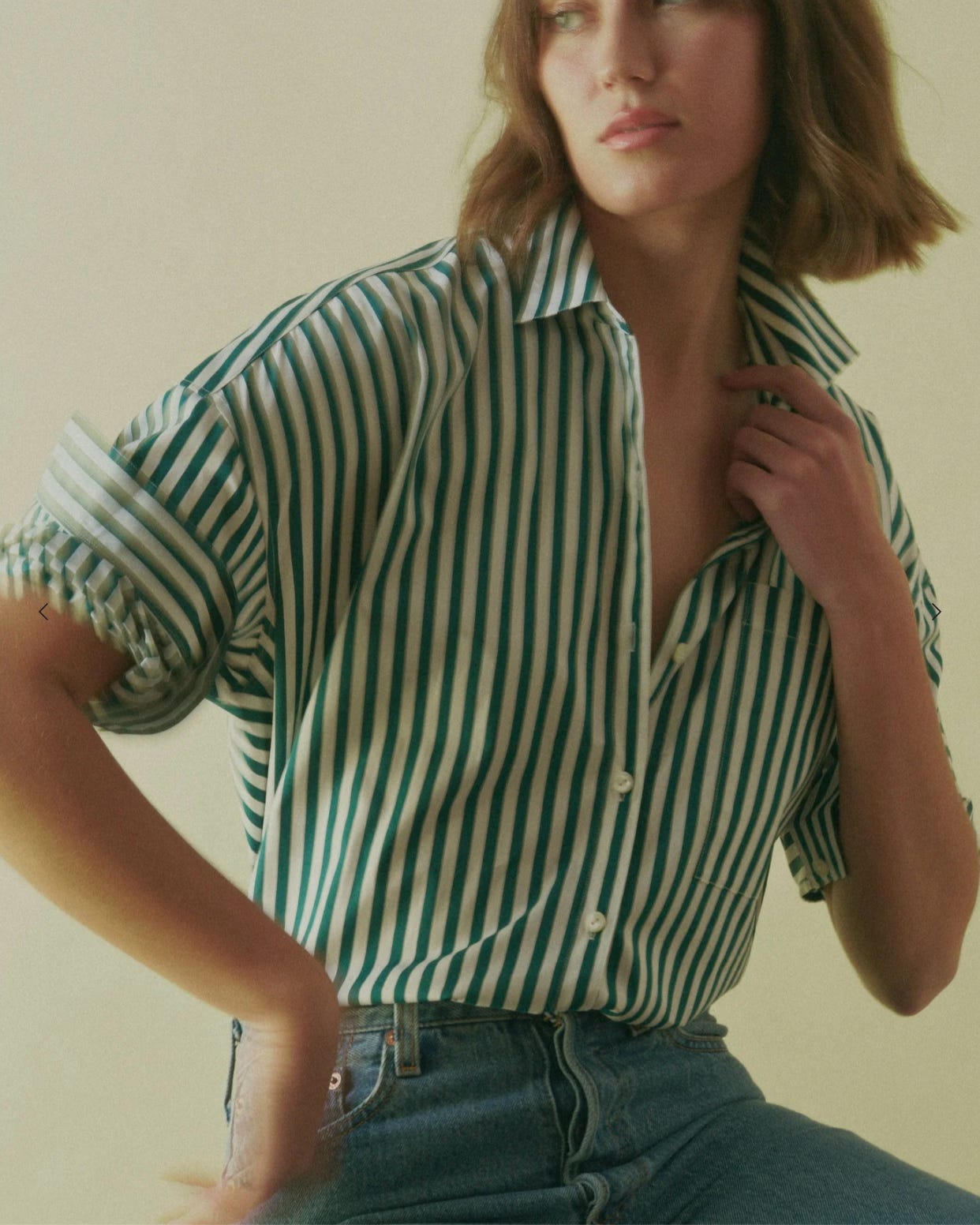
Huge thanks to Jane and Erin for sharing their expert tips. Go follow them, shop their pieces, and tell them I sent you:
Shop The Only Jane, follow @theonlyjane on IG.
Shop E.M. Reitz, follow @e.m.reitz on IG.
Need help building a wardrobe of pieces actually worth caring for?
I work with clients to build wardrobes focused on quality over quantity—everyday clothes from makers like Jane and Erin, plus investment pieces you’ll actually want to care for properly.
Book a Wardrobe Reset and we’ll audit what you have, identify what’s missing, and create a strategy for buying better and buying less.
Thanks for being here. If this was helpful, tap the heart or leave a comment—it helps more people find this newsletter.
Want help with your actual wardrobe? I work 1:1 with people on everything from styling sessions to full closet transformations. Learn more about my services.
Keep up between emails: @linkswesendfriends
I find caring for my clothes, shoes and bags very therapeutic. The laundering and ironing, the sweater shaving, shoe polishing…I love it all.
This is priceless for the shirt laundering tips alone!