

Confessions of a Shopgirl #2
6 trendy brands I refuse to spend my own money on

In case you missed it: a few weeks ago I shared a handful of brands I consistently recommend to clients for wardrobe staples — the unsponsored, under-the-radar labels that I think are worth your money. Y’all loved it, so I had to write a part two.
Before I spill which all-over-your-feed brands I think you should skip, some context on why I feel qualified to talk about this — especially for my new readers. Welcome, btw! I’m so glad you’re here.
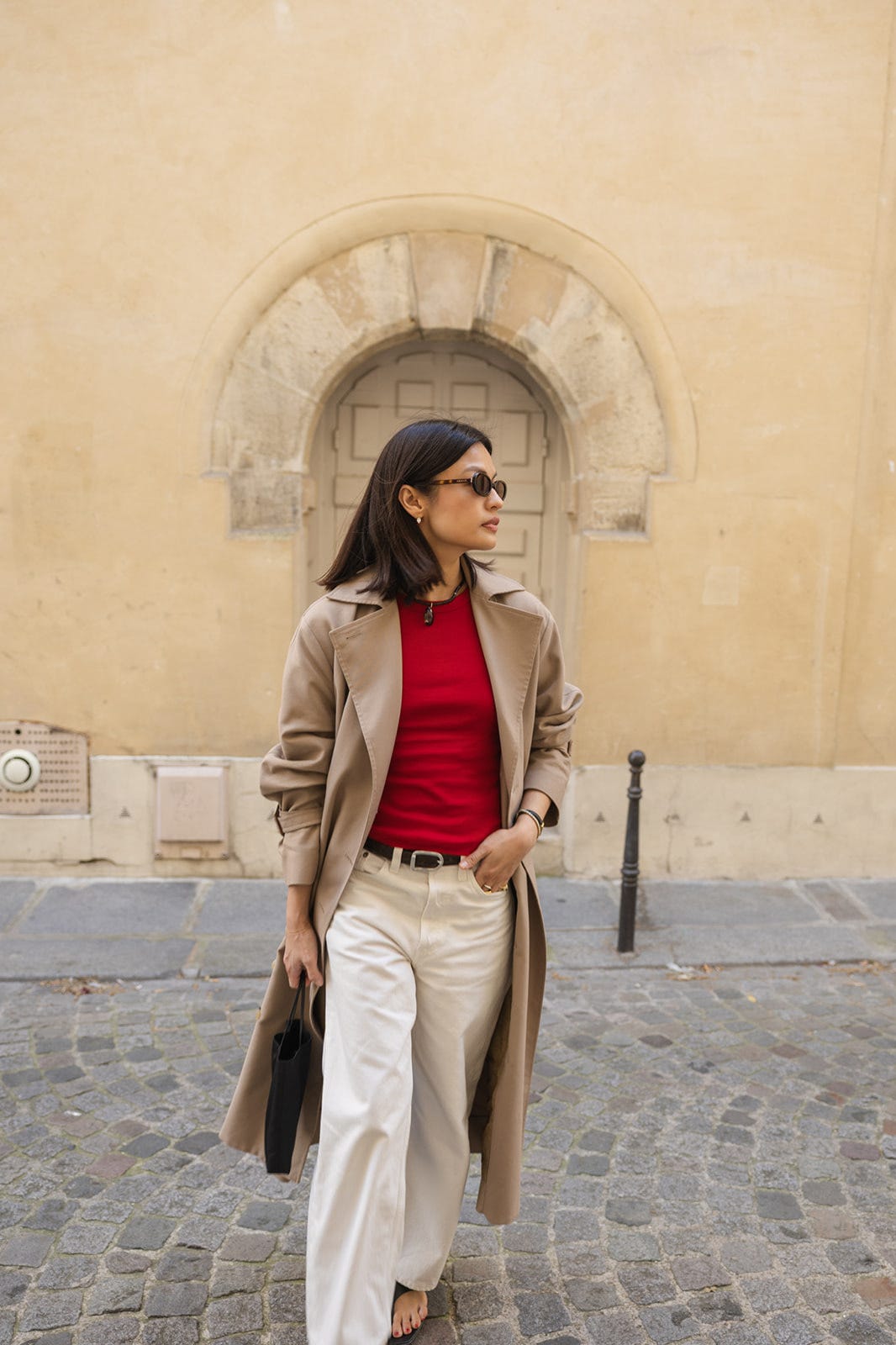
Let’s throw it back to 2024. I got laid off from my 9-to-5 and started dabbling in content while I figured out my next move. I already had a love-hate relationship with Instagram, so this newsletter was born as a creative challenge and antidote to the brain rot I was actively contributing to.
Not long after I started posting my mirror selfies, packages started arriving at my door. I still remember my very first gifting request: a Madewell PR girl emailed me about their campaign for the Flea Market jeans relaunch. I was like, wait… Madewell wants to send me free jeans?! Lil o’l me and my ~500 followers were ecstatic.
After that first taste of free product, I unboxed more PR packages than I could have imagined — many from the cool, trendy brands you constantly see on your feed.
Somewhere around box number I-stopped-counting, the free clothes and shoes and random shit started to feel like inventory I had to deal with. What brands were most excited to send wasn’t always what I’d tell a friend to buy. Some of it was really great. A lot of it was just fine. And some of it I never wore again after I snapped a pic and tagged the brand on stories. I was part of the problem, too.
Around the same time, a different kind of request started coming in. Not from brands, but from regular women (not derogatory) whose closets were full of clothes but still had nothing to wear. So I leaned into that, and it’s what I do now: I’m a personal stylist and wardrobe consultant — which is a bit of a full-circle moment, because I spent over a decade in fashion and retail tech. I was part of the OG styling team at Stitch Fix, then helped Amazon launch their first physical fashion store. I also work at a specialty luxury shop, which means I get to see what’s actually well made up close, across price points most people never get to compare side by side.
Content creation will always be part of my work though, because a girl’s gotta market herself! And I still use affiliate links and disclose when something’s been gifted. Most gifting requests I get these days I turn down, and the ones I accept only get a mention if I truly love the product and would spend my own money on it.
The idea for this letter actually came to me after I posted this note about a recent gifting request. If you’re tuned into Fashion Substack, you’ve probably seen the links being thrown around for a $436 pair of silk taffeta cargo pants, dubbed the pant of the summer and the unofficial uniform of a specific subset of creators on the platform.
For the record, I’m not hating on these pants just because they’re trendy or because they’re everywhere. I enjoy buying and wearing trendy things too (I’m just a girl).
If you really love them and can afford them, by all means, go buy yourself a pair. Or, if you already own the pants and think they’re worth the $$$, then I’m happy for you (for real). I also want to acknowledge that what I consider “worth it” can be different from yours, and that is totally fine.
But what I don’t like is the relentless promotion of an “IT item” that makes someone feel like they have to have it, when a significant number of people pushing the product didn’t even pay for it themselves.
Let this sink in for a sec… a brand I’m about to tell you to skip at full price is happy to send me their product for free, because I happen to meet their gifting criteria. This is exactly why I feel qualified to write about this.
I’ve actually bought their pieces with my own money (the hype got me too, ok?), and I’ve been gifted a handful over the years, so I can confidently say: some of their stuff is good, and some of it isn’t. I stopped buying from them after my silk organza shirt, which retailed at ~$400, ripped at the seam after three wears. So no, I’m not spending my own money on the pant of the summer. I did accept the recent gifting, though (for science). Part of my job is recommending products to my clients, so I need to do my due diligence: does the product actually hold up or does it just photograph well?
All of which is to say: I don’t work for the brands. I work for you. Getting free clothes from a ~cool~ brand is a fun perk, but they don’t buy my opinion — and the second they do, this newsletter would be worthless to my readers, my clients, and therefore to me.
But I also know that for a lot of you, a list of better brands isn’t going to fix the root of the problem. You can buy the best white t-shirt in the market, and it’ll be a great tee, and you’ll still stand in front of a full closet three weeks from now feeling like you have nothing to wear.
And I say this as someone who does this for a living: that feeling is almost never about how many clothes you own. So I’m going to give you the list, and one thing most people miss — you don’t always need more “good pieces”. You need to understand why the clothes you already own aren’t talking to each other. Once you crack that, you finally stop buying the wrong things.
Ok that was a tangent, and I know you came here for the tea so let’s get into it. I ask myself the same question every time, gifted or not: Would I buy this right now, at full price, with my own money?
It sounds obvious, but free or a generous discount rewrites the whole math. A $436 pant feels worth it when it shows up at your door for nothing. The test is whether I’d hand over my own $436, and most of the time, the answer is no.
The access I have through my work also comes with the knowledge of roughly what things cost before markup. That doesn’t mean markups are a scam, to be clear. Retailers have to cover returns, unsold inventory, rent, paychecks, the works. But it does mean I can usually tell when a price is about the craft and when it’s mostly about the label.
You don’t need to be an insider to shop smarter, though. You just need to be honest with yourself. Spotting quality warrants its own letter, but here are a few questions to get you started:
Would I pay full price today, without a discount code or sale? If I only want it at 40% off, I want the deal, not the piece.
Would I still want this if no one could tell what brand it was?
Is the price about the craft, or just about the label? This one takes a little homework. If you’re shopping in person: examine the weight and hand feel of the fabric, are the seams lying flat, do the buttons and zippers feel substantial, not plasticky. Online: check the fiber content and look for any reviews that mention how it held up after washing.
Below the paywall: six brands I’d skip, where I’d spend my money instead, and what a pair of influencer-favorite jeans actually costs before markup.
